

Desk work asks more of your eyes than it looks like it does. Screens, air conditioning, low humidity, and overhead lighting all work on your tear film at once, and by 3 p.m. your eyes can feel gritty and worn out.
Plenty of people write that off as normal. Your office dries out your eyes because screens slow your blinking while the air around you pulls moisture off the surface of your eye faster than your tears can replace it.
Most of that you can influence yourself. Some of it points to dry eye that needs treatment, which an eye exam can help sort out.
Why Your Office Dries Out Your Eyes
Dryness doesn’t always feel dry, which throws people off. Watery eyes are a common form, since the surface floods with reflex tears when it gets irritated. Watch for a few of these during a normal workday:
- Redness or stinging that comes and goes
- Watery eyes with no clear cause
- Blurriness after a long stretch of screen time
- A gritty feeling that peaks in the afternoon
- Eyelids that feel heavy before you head home
Why Screens Slow Your Blink Rate
Blinking spreads a fresh layer of tears across the surface of your eye. Comparing spreadsheets or scanning email keeps your attention locked forward, and your blink rate can drop by about 30%.
Blinks also get shallower when you concentrate. A partial blink never reaches the lower lid, so the tear film doesn’t spread all the way and the center of your eye stays exposed.
That’s part of why the afternoon feels worse than the morning. Each hour of shallow blinking starts with less moisture on the surface than the hour before it.
How Office Air Dries Out Your Eyes
Cool, moving air evaporates tears quickly, and most buildings run it from open to close. Sitting under a vent puts your eyes in a steady draft for 8 hours straight.
Humidity plays a role too. Conditioned air often sits below the 40% range where eyes stay comfortable, so your tears disappear faster than your glands can keep up.
Scan your workspace for anything that adds to it:
- A vent aimed at your face or the top of your head
- A desk fan pointed anywhere near you
- Dry air from the heat running in winter
- Harsh overhead lighting that makes you squint
How to Prevent Dry Eye in the Office
A few habits can ease the strain on your eyes without slowing your workday. Try building these into your routine:
- Follow the 20-20-20 rule. Every 20 minutes, look at something 20 feet away for 20 seconds.
- Blink fully and on purpose when you notice your eyes getting scratchy.
- Aim for 8 to 10 glasses of water a day so your body has fluid to make tears.
- Take your lunch away from your desk instead of eating in front of the monitor.
Simple Workspace Changes for Relief
If your workspace is what’s causing your dry eye, then start by making your space work for you.
Adjust Your Screen and Lighting
Where your screen sits changes how wide your eyes stay open. A screen that’s too high forces your lids apart and speeds up drying.
Drop the top of your screen 4 to 5 inches below eye level so your gaze angles down a little. Keep it roughly an arm’s length away.
Then deal with glare. Close the blinds partway or swap a bright bulb for something softer, and a matte filter can help if a window sits behind you.
Add Moisture Back
Once you’ve cut down on what’s drying your eyes out, put some moisture back where you spend your day.
A few additions can make the air easier to work in:
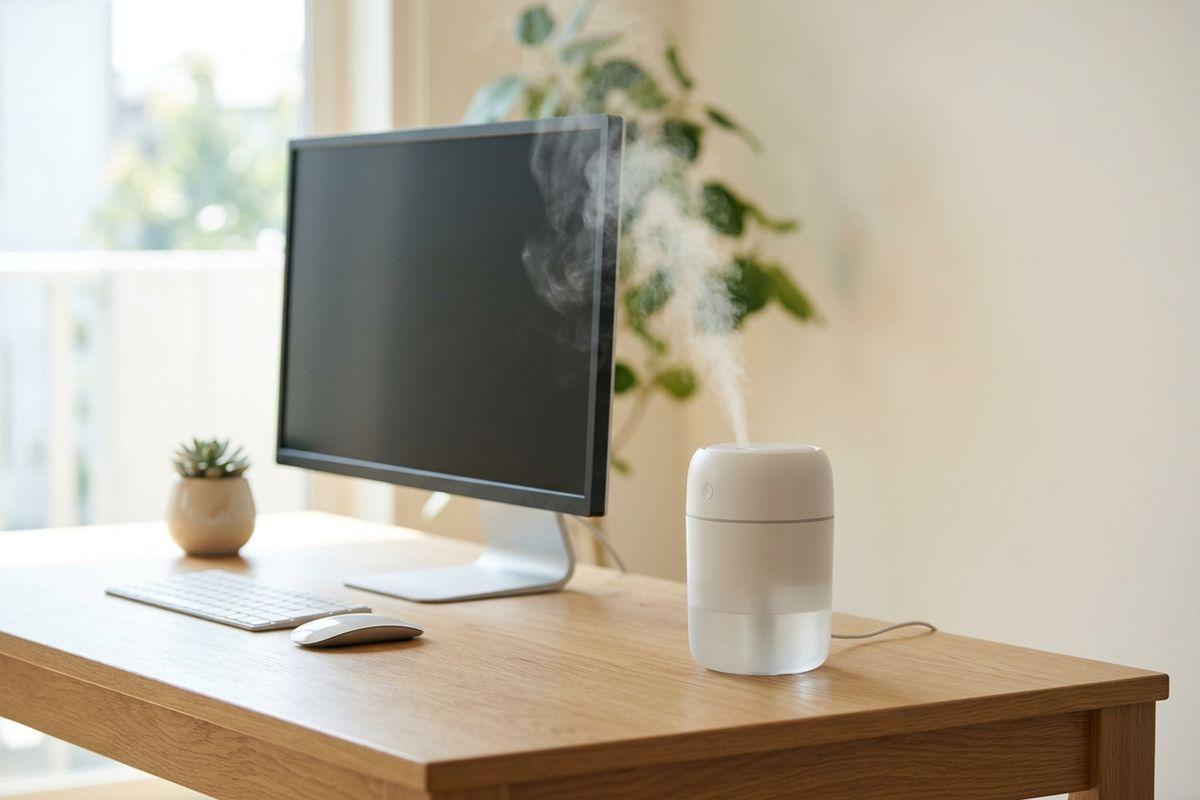
- Keep a small humidifier near your desk to add water to the air.
- Try over-the-counter artificial tears when your eyes feel dry.
- Wear glasses instead of contacts on rough days, since contacts can dry out faster.
When to See an Optometrist About Dry Eyes
New habits help many people, but they don’t fix everything. Symptoms that stay put after a few weeks usually mean something else is affecting your tear film.
Your optometrist can measure how fast your tears evaporate and look at the oil glands along your lid margins during a comprehensive exam. Blocked glands and medication side effects can both cause the same afternoon burning, and so can an out-of-date prescription.
Schedule a visit if any of this sounds like you:
- Dryness that hangs around for more than a few weeks
- Drops that used to help and now don’t do much
- Vision that goes blurry and then clears when you blink
- Sensitivity to light or swollen eyelids
Give Your Eyes an Easier Workday
Your eyes shouldn’t feel used up by every afternoon, and you shouldn’t have to guess at what’s behind it.
Bring up what you’ve been noticing at your desk, and the optometrists at Total Vision Little Tokyo can look at your tear film and your workspace together. Book an appointment and start your next workday with more comfortable eyes.