
A blurry whiteboard or a fuzzy library book can hold a child back long before anyone thinks to blame their eyes. Slipping grades, restlessness, and half-finished homework often trace back to sight, not effort or attention. Book a comprehensive eye exam to settle the question, and keep an eye on a few habits at home so the warning signs are easier to catch.
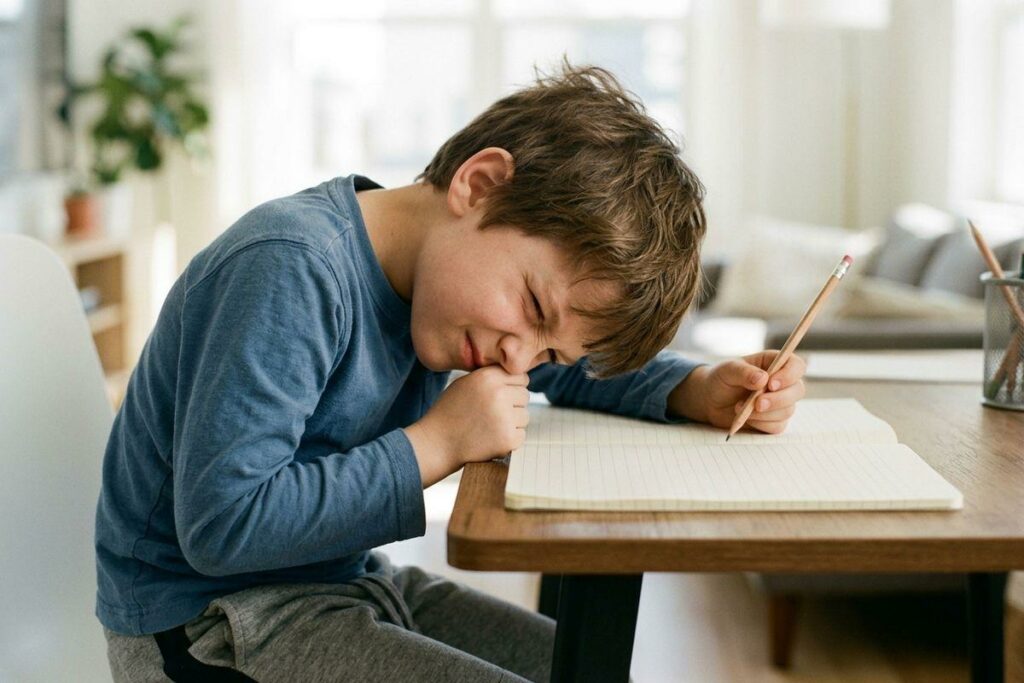
Watch for squinting, head tilting, eye rubbing, and headaches during reading or screen time. These are the clearest signs your child may be struggling to see, and a children’s eye exam can confirm whether their eyes are behind it.
Why Vision Matters for School Success
Picture an ordinary school day. Your child reads the board, copies notes, follows along in a book, and stares at a screen for hours at a stretch. Nearly every one of those tasks depends on clear sight. When vision blurs, notes turn messy and focus drifts.
A child might reread the same line 3 times or miss half of what the teacher writes on the board. Kids rarely announce that their sight is off. Most assume everyone sees the world the same fuzzy way they do.
So the signs tend to show up in behavior long before your child says a word about it, even during quiet moments like watching a screen at home.
Nearsightedness, farsightedness, and astigmatism all affect kids differently. A child who’s nearsighted may struggle with the board but read a book just fine up close, while a farsighted child might do the opposite. That’s part of why the signs can be so easy to miss.
Signs to Watch at Home
Home is where small habits are easiest to notice. Pay attention when your child reads, plays, or looks across the room, and watch for these signs:
- Squinting or closing one eye to focus on something
- Sitting close to the TV or holding books right up against the face
- Getting frequent headaches after homework or reading
- Rubbing their eyes often, even when they’re not tired
- Losing interest in tasks that involve distance, like watching a movie
Signs Teachers Notice at School
Teachers often notice things you can’t see from home, so ask how your child handles board work and instructions. Look for these patterns:
- Trouble reading the board from a normal seat
- Copying notes incorrectly or missing spoken instructions
- Avoiding close-up work like coloring or reading worksheets
Vision Trouble or Attention Trouble?
Here’s where it gets confusing. A child who can’t see well can look a lot like a child who won’t pay attention. Both can lead to fidgeting, daydreaming, and unfinished work, which makes it easy to blame the wrong thing.
Start by talking with your child and their teacher. Ask what a normal day feels like, where the frustration tends to show up, and whether it happens more with board work, reading, or both.
An eye exam is a straightforward way to rule sight out as a factor. Once you know how your child actually sees, you can figure out what’s really going on.
What Happens During an Eye Exam
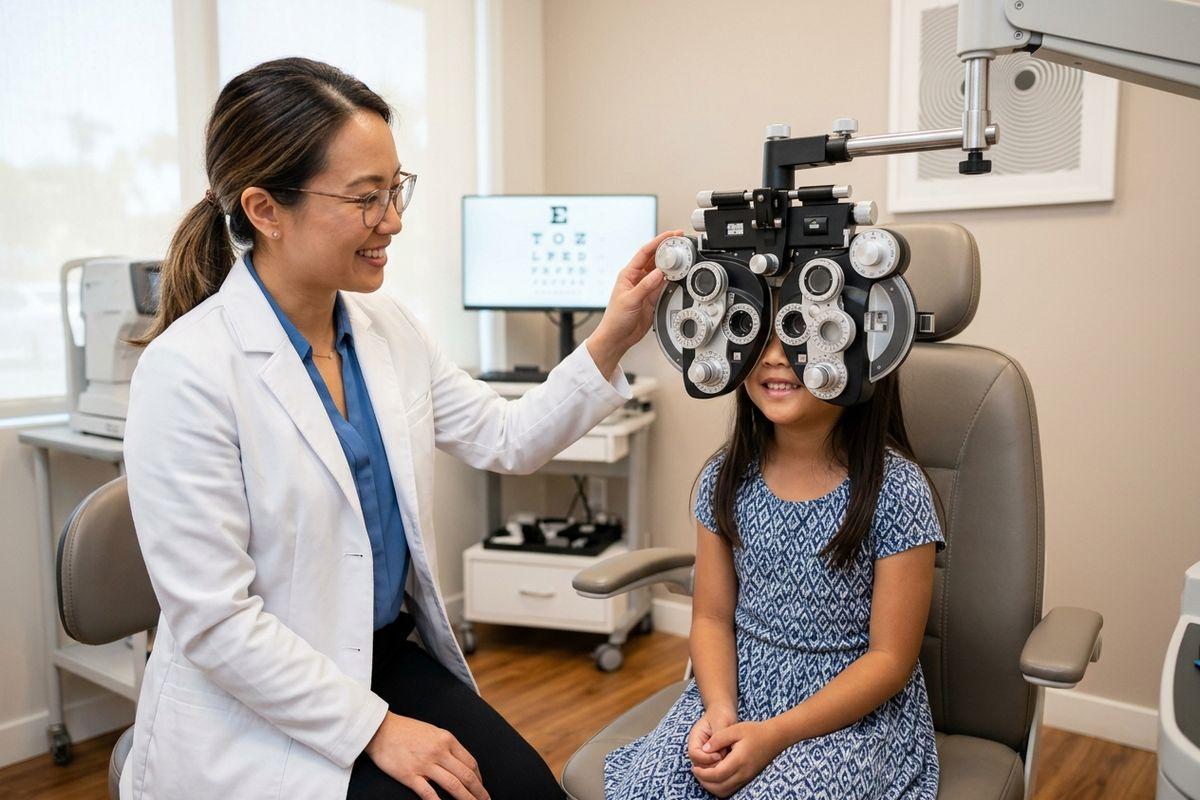
A comprehensive eye exam looks past the surface to find what’s really causing the trouble. Your optometrist checks how each eye works on its own and how well they work together.
If your child needs correction, the right prescription can bring the board back into focus. For kids whose nearsightedness keeps increasing, ask about myopia management, which may help slow that progression over time.
What Your Optometrist May Recommend
Every child’s eyes are different, so the plan depends on what the exam shows. Your optometrist may suggest:
- Prescription glasses for clearer distance vision in the classroom
- Contact lenses for active kids who play sports
- MiSight 1 day lenses to help manage myopia in growing eyes
Daily Habits That Support Healthy Eyes
Small routines add up over a school year, and a few simple habits can take some strain off your child’s eyes:
- Build in screen breaks so eyes get to rest between long stretches of close work. Try the 20-20-20 rule: every 20 minutes, look at something 20 feet away for 20 seconds.
- Keep reading areas bright and free of glare so your child isn’t straining to see the page.
- Get your child outside every day. Time in natural light supports healthy eye development.
Give Your Child a Clearer View of the Classroom
If any of these signs sound familiar, don’t wait for report cards to answer the question. Talk to your child, check in with their teacher, and book an exam to figure out exactly where the problem is.
Total Vision Little Tokyo can help you get answers. Schedule a comprehensive eye exam and give your child a clearer view of the classroom.